
Plating on aluminium
We plate silver, gold, electroless nickel, tin, nickel, tri-metal and copper on aluminium parts, such as RF filter housings, cavity filters, lids and switchgear parts.
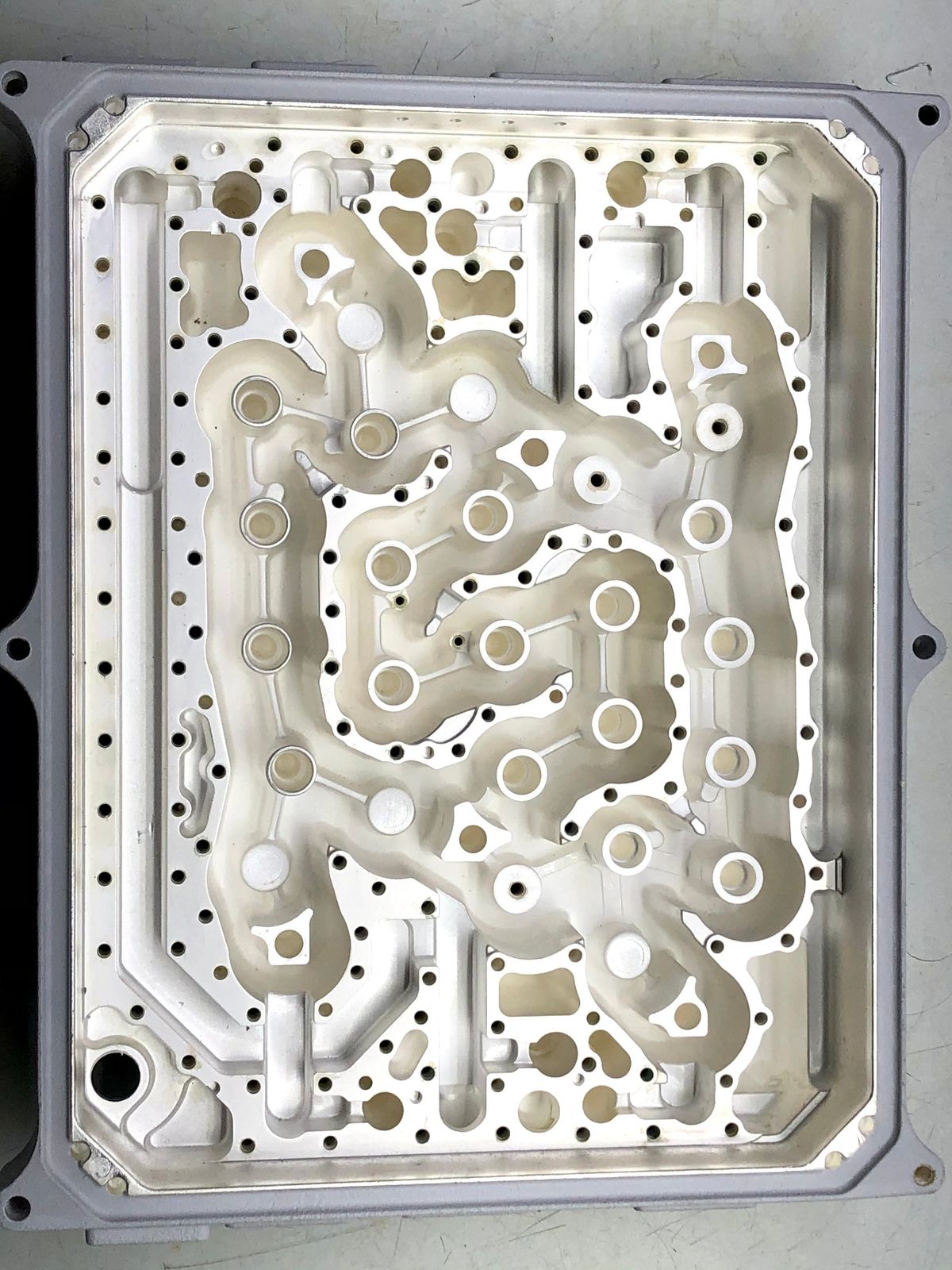
- Part
- RF filter housing
- Base
- Aluminium
- Finish
- Silver
Why aluminium needs its own preparation
Aluminium is light, easy to machine and cast, and conducts electricity well, which is why it is used for RF filter housings, cavities, lids and many electrical parts. Its surface is the difficulty. Aluminium forms a thin, hard oxide film within seconds of meeting air, and plating does not bond to that film. Aluminium also reacts quickly with most plating solutions.
So aluminium parts go through their own pre-treatment before the first layer of metal is plated, and the rest of the coating is built on that.
How aluminium is prepared for plating
The usual method is the zincate process:
- Clean and etch. Oils are removed, and a light etch takes off the natural oxide.
- Desmut. The etch leaves alloying elements such as silicon, copper and magnesium on the surface as a dark film, which is dissolved off.
- Zincate. The part is dipped in a zincate solution, which replaces the oxide with a very thin layer of zinc.
- Strike. A first layer of electroless nickel or copper is plated onto the zinc, and the specified finish is plated over it.
Finishes we plate on aluminium
| Finish | Usual build-up on aluminium | Typical parts |
|---|---|---|
| Silver | Over copper or electroless nickel | RF filter housings, cavities, lids, busbars |
| Gold | Over nickel or electroless nickel | Connector bodies and RF parts |
| Electroless nickel | Directly after zincate | Housings and lids, and as a base for silver or gold |
| Tin | Over copper or nickel | Busbars, switchgear parts, solderable areas |
| Nickel | Over copper or electroless nickel | Parts needing wear and corrosion resistance |
| Tri-metal | Over copper | RF connector parts |
| Copper | Directly after zincate | Underlayer, and conductive coating |
Each finish has its own page with thicknesses, variants and specifications: silver, gold, electroless nickel, tin, nickel, tri-metal and copper. Electroless nickel on aluminium has its own page: electroless nickel plating on aluminium.
RF parts and passive intermodulation
On RF filters, diplexers and cavities, magnetic layers in the coating can cause passive intermodulation (PIM). Ordinary nickel is magnetic, so RF parts are usually built up with copper under the silver, or with high-phosphorus electroless nickel, which is non-magnetic as plated. If your part has a PIM requirement, put it on the drawing.
Wrought, cast and die-cast aluminium
Machined parts from wrought alloys usually plate well. Cast and die-cast parts contain more silicon and can have fine porosity, which can trap solution and cause blisters after plating. They need an adjusted etch and careful rinsing. Tell us the alloy and how the part is made, so we can plan the pre-treatment.
What to put on your drawing or enquiry
- Aluminium alloy and temper, and whether the part is machined, cast or die-cast
- Final finish and its thickness in µm
- Underlayer, if your drawing specifies one, and any PIM or non-magnetic requirement
- Areas to mask, such as threads, tapped holes or mating faces
- Quantity per lot and expected yearly volume
Thickness measurement
Coating thickness on aluminium parts is measured in-house on our Fischerscope XRF instrument, which reads up to three layers in one measurement, for example silver over copper. We supply an XRF thickness report with each batch.
Email your drawing for a quote
Attach the drawing and include as much of this list as you can. The more you send, the fewer questions we need to ask before quoting.
- Drawing: PDF, DWG, DXF or STEP
- Base material and grade
- Finish, and thickness in µm
- Quantity per lot and yearly volume
- Areas to mask, if any
- Standard or customer specification