
Tri-metal plating
Tri-metal is a copper-tin-zinc alloy plated in one layer. It gives a white, non-magnetic, nickel-free finish used on RF connector bodies where passive intermodulation matters.
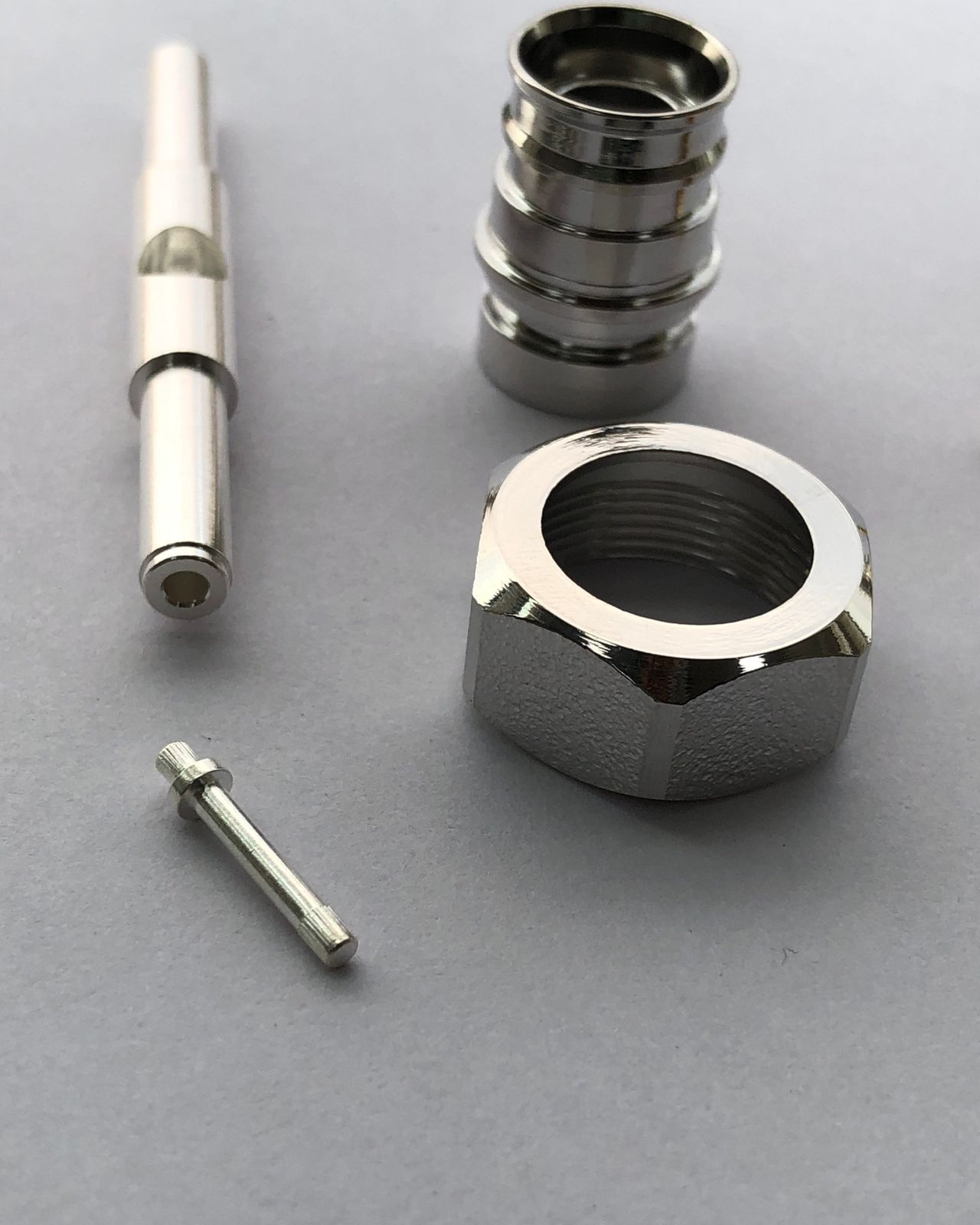
- Part
- Connector body, nut and pins
- Finish
- Tri-metal
What tri-metal is
Tri-metal is an alloy of copper, tin and zinc plated in one layer. A common composition is roughly 55% copper, 30% tin and 15% zinc. It has a bright, white, silver-like colour.
Why it is used on RF connectors
- Non-magnetic. Magnetic layers such as nickel can cause passive intermodulation (PIM), unwanted signals that interfere with mobile network equipment. Tri-metal avoids this, so it is used on connectors and parts in the RF path.
- Nickel-free. It suits parts that are handled, where nickel allergy is a concern.
- Tarnish-resistant. It keeps its appearance in storage and service better than silver.
- Hard and solderable. It stands up to handling and coupling, and can be soldered.
Centre contacts are usually silver or gold plated, with tri-metal on the outer body.
Copper underlayer
We plate tri-metal over a copper underlayer in most cases. The copper helps adhesion and levels the surface, and keeps the whole coating system non-magnetic.
What to put on your drawing or enquiry
- Base material and grade
- Tri-metal thickness in µm, and any underlayer
- Any PIM or salt spray requirement
- Areas to plate or mask
- Quantity per lot and expected yearly volume
Specifications
There is no single international standard for tri-metal. It is usually specified on the connector maker's own drawing or plating specification. Send yours with your drawing and we will confirm whether we can meet it.
Thickness measurement
Tri-metal thickness is measured on our Fischerscope XRF instrument, which does not damage the part.
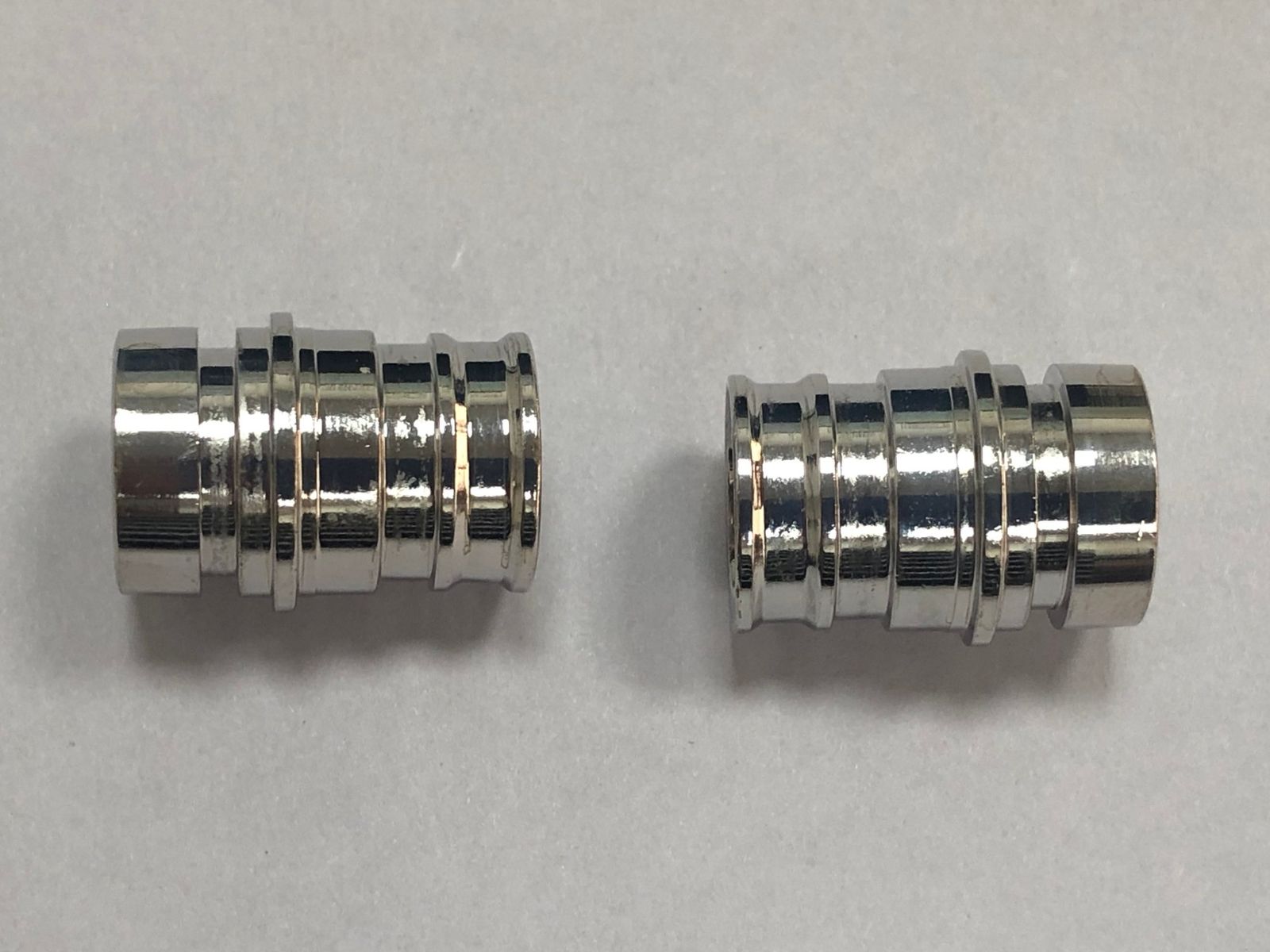
Parts we have tri-metal plated
Also consider
Email your drawing for a quote
Attach the drawing and include as much of this list as you can. The more you send, the fewer questions we need to ask before quoting.
- Drawing: PDF, DWG, DXF or STEP
- Base material and grade
- Finish, and thickness in µm
- Quantity per lot and yearly volume
- Areas to mask, if any
- Standard or customer specification